_compressed_compressed.avif)
Blog
2025: The year Payaca grew up
Enterprise wins, profitability, and why we're betting big on AI that actually does things.
Discover everything you need to know about qualifying as a PV solar installer, including training time, cost and industry insights.

Felix Rusby
Technically you do not need a qualification to install solar panels — some homeowners even attempt to do it themselves. However, in practice, if you want to operate as a solar installer and find work, you will need to be officially qualified.
Recommended qualifications:
Technically, any person can install solar panels. However, connecting the solar energy supply to the mains electricity network requires a qualified electrician.
In most cases, solar installations are completed by a team of electricians often with the help of a roofer (if the panels are installed on a roof).
To work on solar installations you should first qualify as an electrician and then specialise in solar installs. You can either do this by taking a college course or by completing an apprenticeship.
At college, start by gaining your standard electrical qualifications:
If you don't fancy studying at college, an apprenticeship is a great way to learn practical skills while on the job. Typically takes around 2 years to complete and qualifies you as an electrician.
Once you've completed your college training or apprenticeship, consider a specialist solar installation course:
The cost varies depending on your current stage of training.
Starting from scratch: Level 2, 3 & NVQ courses cost £7,000-£9,000, plus £600-£700 for a solar course. Total: £8,000-£10,000.
Already qualified electrician: Solar course only: £600-£700. Your employer may cover costs.
The quickest you could become qualified (completing all courses back-to-back) would be 7 months 3 days. In reality, gaining necessary experience typically takes over a year minimum.
The average salary is £37,912 based on data from Talent, Adzuna, Reed and Totaljobs.
Salaries vary by location. For example, electricians tend to earn more in Sheffield than in London on average.
As of May 2023, there were 2,286 qualified PV contractors in UK — a 66% increase from the previous year.
The work is well paid and good value for the time it takes. As a career, it's a good combination of practical work and technical skill which makes it an interesting and varied job.
Advantages:
Challenges:
As an installer, you need to understand building regulations and complete paperwork. This includes contacting the Distribution Network Operator (DNO) to notify them of completed installations.
Once you've decided to get qualified and start work as a PV installer, you need to think about how you're going to manage your new customers.
The best way to organise your business and provide the best experience for your customers is to use high-quality CRM and job management software. Payaca provides market-leading features including customised automation and multiple choice quoting designed for businesses like yours.
If you're interested in other forms of green energy, consider becoming a heat pump installer — another high-demand career in the renewable energy sector.
See how Payaca helps clean tech installers save time and grow their business.
Book a demoEnterprise wins, profitability, and why we're betting big on AI that actually does things.
.png)
This value represents our commitment and focus to remove complexity for our clients. In order to achieve this, it needs to be adopted across the whole organisation.
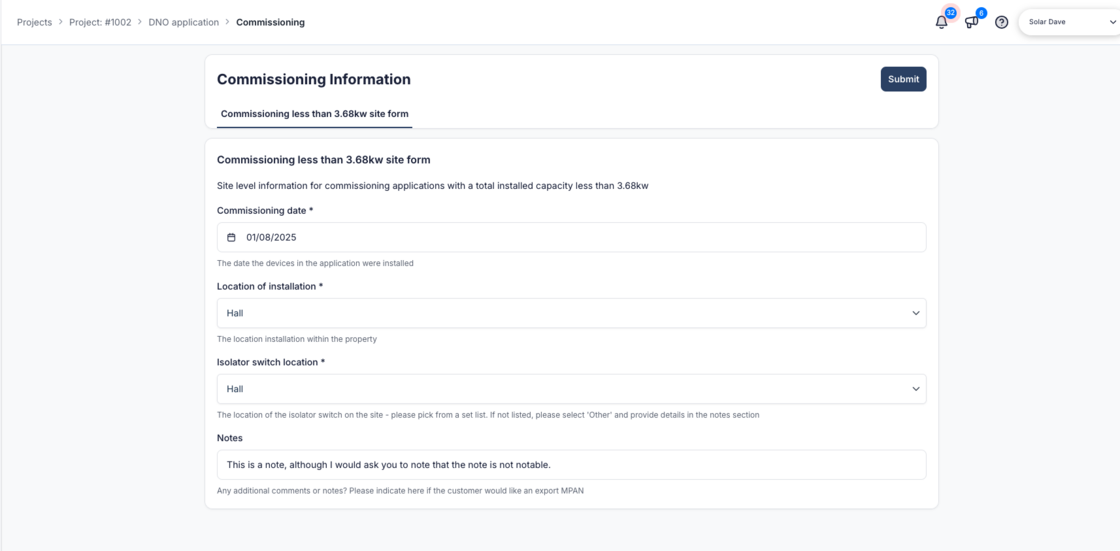
Payaca now handles commissioning applications for G98 and G99 installations. Complete the full DNO compliance workflow from initial application to final energisation approval.