Blog
Jobber alternatives for solar and clean tech installers
Jobber works well for general trades. Here's an honest look at the alternatives when solar, heat pump, or EV charger work pushes you past what it can handle.
This article weighs up the reasons why you should consider investing in a CRM, including signs that you need it and what type of solution to look for.

Felix Rusby

CRM stands for Customer Relationship Management, but that doesn't tell you much. In practice, a CRM is the system that holds your customer information, tracks your jobs from enquiry to completion, and stops things falling through the cracks as your business grows.
For a small installation business, that might mean knowing which leads you've quoted, which quotes are outstanding, and which customers need a follow-up. For a larger operation, it means managing multiple crews, tracking project stages, automating routine communications, and having a clear picture of your pipeline.
If you're a one or two-person operation doing a handful of jobs a month, you can manage with a spreadsheet, a calendar, and a decent memory. There's no point paying for software you won't use.
But there's a tipping point - usually somewhere between 5 and 15 jobs a month - where the spreadsheet approach starts costing you more than a CRM would. Leads go cold because nobody followed up. Quotes get sent late. Customers chase you for updates because there's no system keeping them informed. You end up hiring an extra office person to manage what software could handle automatically.
1. You're losing track of leads. Someone enquires on Tuesday, you mean to quote them on Thursday, and by the following week you've forgotten. If you're honest about it, this probably happens more than you'd like.
2. Your team can't find information. An engineer calls from site asking about a customer's system specs, and nobody in the office can find the details quickly. Everything's in different spreadsheets, emails, and WhatsApp threads.
3. Customers are chasing you. When customers have to call you to find out what's happening with their job, that's a process failure. They should be getting updates automatically.
4. You can't answer basic questions about your business. How many quotes did you send last month? What's your conversion rate? Which lead sources are generating the most revenue? If you can't answer these without spending an hour pulling data together, you're flying blind.
5. Growth is creating chaos, not profit. More jobs should mean more profit, but if every new job adds proportionally more admin, your margins compress as you grow. That's a systems problem.
6. You're hiring admin staff to compensate. If you're adding office people primarily to manage information that software could handle, you're paying salaries to do a computer's job.
Real example
Swift Heating were spending over 10 hours a month just replying to customers manually. After implementing a CRM, that dropped to 10 minutes. They went on to triple their turnover and become a million-pound business. The software didn't cause that growth, but it removed the bottleneck that was preventing it.
Not all CRMs are built for the same type of business, and picking the wrong one is worse than having none at all. A system that doesn't fit your workflow just becomes another thing your team ignores.
Generic CRMs like HubSpot and Salesforce are powerful, but they're designed for sales teams selling software or services. They're not built around jobs, site visits, compliance requirements, or the quoting process that installation businesses rely on. You can make them work, but it takes significant configuration and ongoing maintenance.
Field service tools like Commusoft, ServiceM8, or Tradify are closer to what installation businesses need. They understand jobs, scheduling, and invoicing. The trade-off is that most are built for reactive service work (boiler repairs, plumbing callouts) rather than project-based installations.
Industry-specific platforms like Payaca are built around the workflow that installation businesses actually follow - from lead capture through quoting, scheduling, compliance, and invoicing. The advantage is that things work out of the box without weeks of configuration. The trade-off is a smaller ecosystem of integrations compared to Salesforce or HubSpot.
The right choice depends on where your business is and what type of work you do. A solar installer doing 30 installations a month has very different needs from a plumber doing 30 service calls a day.
Most businesses wait too long. They invest in a CRM after the chaos becomes unbearable, which means they're trying to implement new systems while already under pressure - the worst time to change anything.
The better approach is to invest when you can see the tipping point approaching. If you're at 8 jobs a month and growing, you'll need a system before you hit 15. Set it up while you still have the headspace to do it properly, train your team gradually, and have the system ready before you need it urgently.
If you're already past the tipping point and things are breaking, that's fine too - just be realistic that implementation takes time, and it'll feel harder before it feels easier.
Related reading: Why solar installers are replacing their generic CRMs | What software do solar installers use? | What CRM do heat pump installers use?
See how Payaca helps clean tech installers save time and grow their business.
Book a demoJobber works well for general trades. Here's an honest look at the alternatives when solar, heat pump, or EV charger work pushes you past what it can handle.
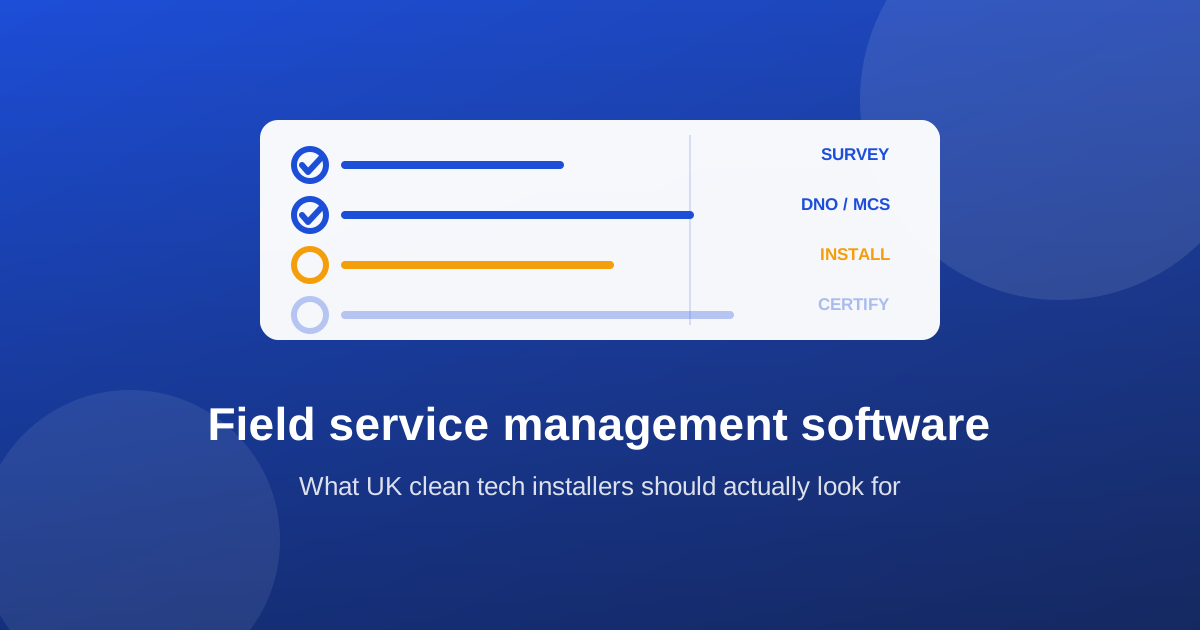
A buyer's guide to field service management software for UK solar, heat pump and battery installers, and why the generic trades platforms stop short of MCS and DNO work.
An honest comparison of the CRM and job management options UK solar installers choose between, and where each one stops covering MCS and DNO work.