SolarNexus is a solar sales tool for contractors. Its strength is the work up to the signature: automatic array design from aerial imagery, hourly energy modeling with battery charge and discharge, and economic estimates covering financing and tax effects, backed by a professional services team that builds your process flow with you. After the sale it centers on tasks and workflow; invoicing, payments and a portal where homeowners sign and pay aren't part of its feature list.
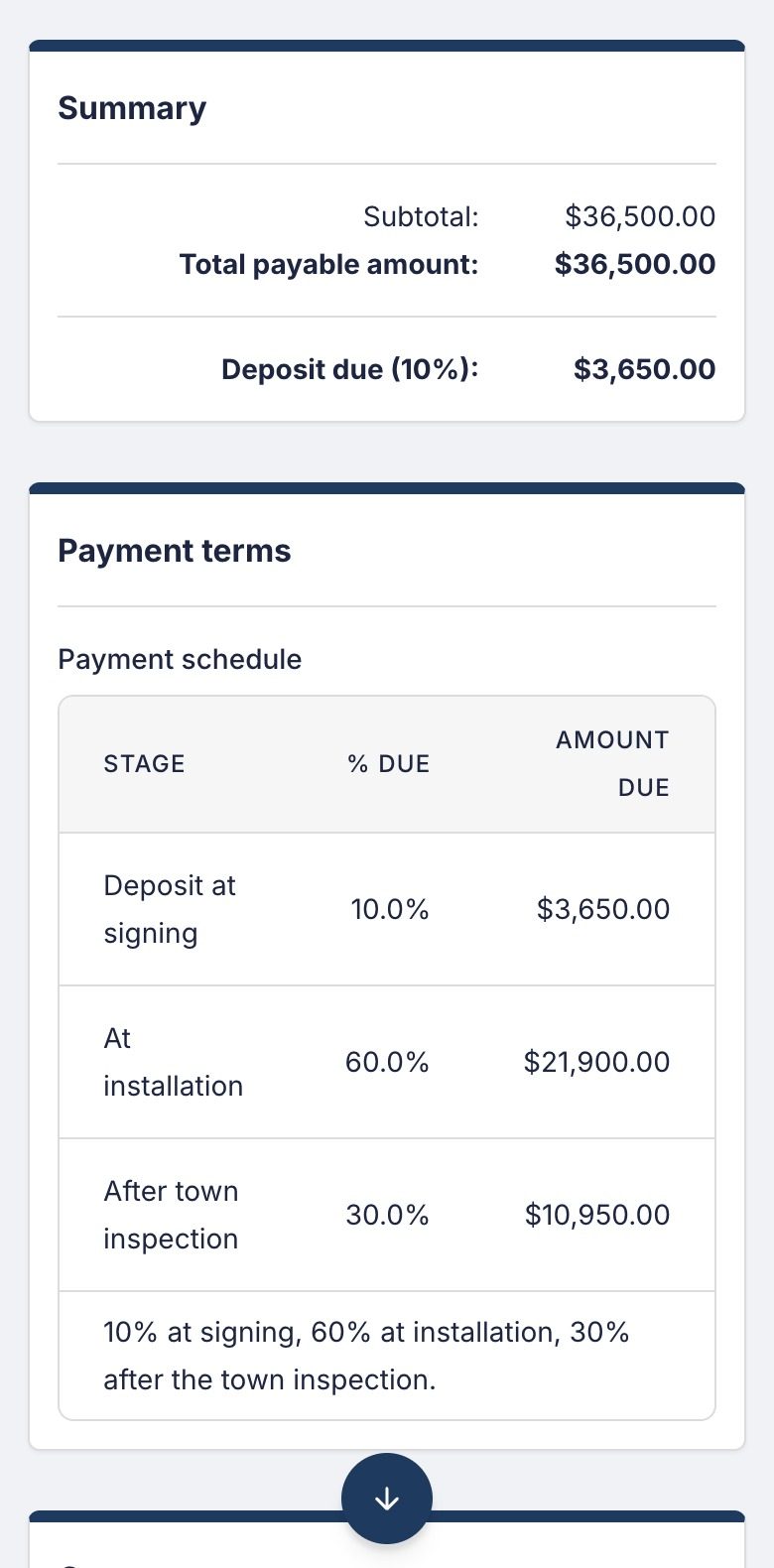
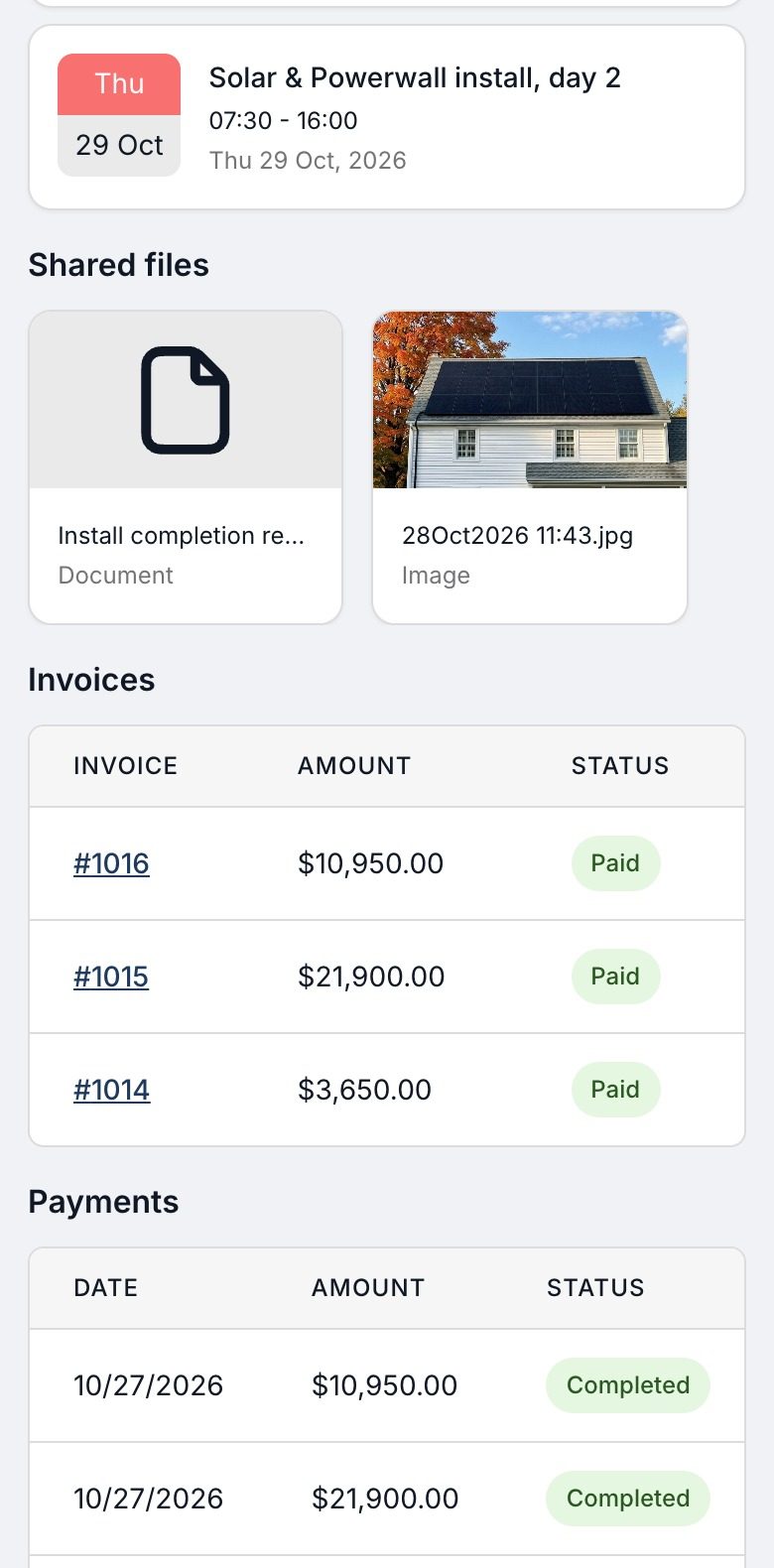
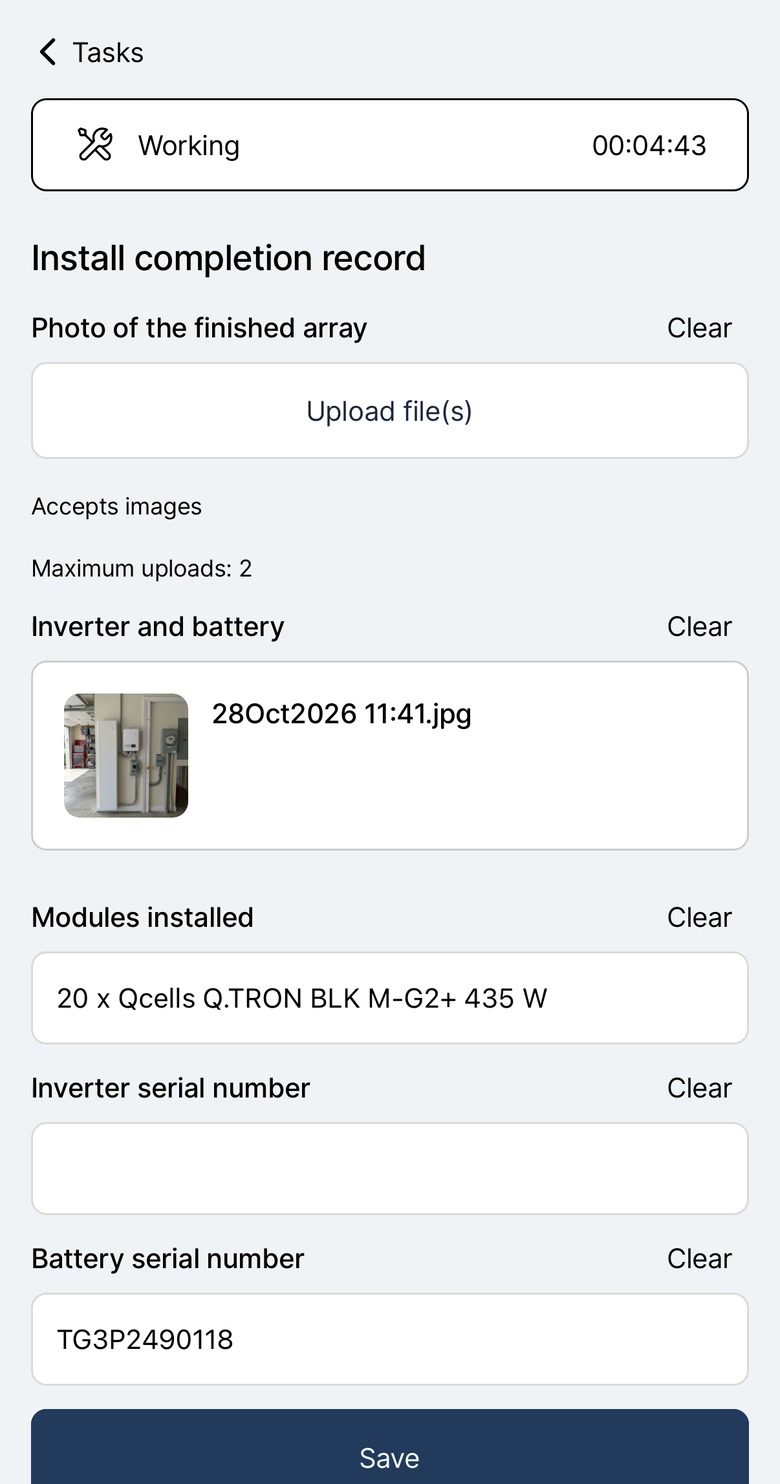
Payaca keeps the whole job on one record: proposals with e-signatures, deposit invoices and payment collection, permit and PTO tracking, an offline field app for crews, and a branded portal where homeowners check dates, sign and pay. It's built for solar, batteries, EV chargers and heat pumps. Here's how they compare for a solar install business.
The short answer
SolarNexus is strong up to the signature. Payaca keeps the whole install on one record, from permit to PTO, including invoicing, payments and a homeowner portal.
- Payaca is best for solar install businesses whose bottleneck is delivery: crews, permits, payments and the customer experience after a customer says yes.
- SolarNexus is best for solar contractors who win deals on detailed sales-side energy and financing modeling, and want professional services to build their process flow.
- Payaca publishes its pricing: Growth, the standard plan for established install businesses, is $1,724/month. Current plans and eligibility are on the pricing page. SolarNexus lists license-based pricing with a minimum license count on its solutions page (checked 2026-10-29).
Looking at this yourself?
We'll show you your own jobs in Payaca, side by side with how you run them in SolarNexus today. Request a demo
Feature comparison
| Feature | Payaca | SolarNexus |
|---|---|---|
| Primary purpose | CRM, proposals, operations, invoicing and payments for clean energy install businesses | Sales and operations tools for solar contractors, backed by professional services |
| Industry focus | Built for solar, batteries, EV chargers and heat pumps | Built for solar contractors |
| Project tracking | Multi-stage installation pipelines with configurable stages | Custom workflows with automated task assignment and work groups |
| Permit tracking | Permit, inspection and PTO tracked on the project | Permits sit inside the custom workflow; planset services can deliver plansets into your account |
| Quoting & proposals | Multi-option solar proposals with e-signatures | Proposal and contract document templates generated from design and economic modeling |
| Invoicing & payments | Deposit and stage invoices with online payment, and two-way sync with QuickBooks and Xero | Not a focus of its feature list: financial tools center on project economics |
| Customer portal | Branded portal where homeowners track the job, sign and pay | Automated customer emails, plus a job-status and system-monitoring portal through an integration partner |
| Sales-side modeling | Glow (limited release), or import from OpenSolar | Hourly whole-year energy modeling with battery charge/discharge and financing cash flows |
| Field team mobile app | Field app that works fully offline, with job forms and timesheets for install crews | Mobile app for leads, projects and job-site capture |
Primary purpose
CRM, proposals, operations, invoicing and payments for clean energy install businesses
Sales and operations tools for solar contractors, backed by professional services
Industry focus
Built for solar, batteries, EV chargers and heat pumps
Built for solar contractors
Project tracking
Multi-stage installation pipelines with configurable stages
Custom workflows with automated task assignment and work groups
Permit tracking
Permit, inspection and PTO tracked on the project
Permits sit inside the custom workflow; planset services can deliver plansets into your account
Quoting & proposals
Multi-option solar proposals with e-signatures
Proposal and contract document templates generated from design and economic modeling
Invoicing & payments
Deposit and stage invoices with online payment, and two-way sync with QuickBooks and Xero
Not a focus of its feature list: financial tools center on project economics
Customer portal
Branded portal where homeowners track the job, sign and pay
Automated customer emails, plus a job-status and system-monitoring portal through an integration partner
Sales-side modeling
Glow (limited release), or import from OpenSolar
Hourly whole-year energy modeling with battery charge/discharge and financing cash flows
Field team mobile app
Field app that works fully offline, with job forms and timesheets for install crews
Mobile app for leads, projects and job-site capture
See it in Payaca
The real product, on our demo accounts.
Operations & scheduling
Schedule your field team on a map and track every job. More on Operations & scheduling
The whole job in 100 seconds
Switching from SolarNexus
Customer and project records come across from SolarNexus through an export. We import them into Payaca through our API and import tooling: customers with their contacts and addresses, and projects at the right pipeline stage, with system details as custom fields and the notes and files you still need.
For new work, design in Payaca with Glow (limited release), or import designs from OpenSolar straight into Payaca proposals.
Guided onboarding is available on Growth and above: we map your workflows, migrate your data and train your team, for a one-off $2,000. The pricing page has the details.
Which is right for you?
Choose Payaca if
- Your bottleneck is delivery, not selling
- You want quoting, payments and the customer portal in the same system
- You install EV chargers or heat pumps alongside solar and storage
- You run service and O&M work next to installs
Consider SolarNexus if
- Detailed sales-side energy and financing modeling drives your close rate
- You value their professional-services-led setup
- You already have payments and customer comms handled elsewhere
Questions
What does SolarNexus do well?
SolarNexus says it comes from direct solar contracting and enterprise software experience, and its strength is the sales side: automatic array design from aerial imagery, hourly energy modeling that includes battery charge and discharge cycles, and economic estimates covering project costs, financing, utility bills and tax effects. Their professional services team also helps build your process flow with you.
Why might a solar company switch to Payaca?
After the sale, SolarNexus centers on tasks and workflow; invoicing, payments and a portal where homeowners sign and pay aren't part of its feature list. Payaca keeps the whole job on one record: proposals with e-signatures, deposit invoices and payment collection, permit and PTO tracking, an offline field app for crews, and a branded portal where homeowners check dates, sign change proposals and pay. If your bottleneck is running installs rather than selling them, that is the difference that matters.
How does pricing compare?
SolarNexus lists pricing on its solutions page starting at $90 per license with a three-license minimum and discounts for more licenses (checked 29 October 2026). Payaca's Growth plan is $1,724/month ($1,437/month billed annually) with 25 users included, plus a one-off $2,000 onboarding. Enterprise pricing is custom.
Can I run service and maintenance work as well as installs?
Yes. Payaca handles servicing and O&M alongside installation pipelines, which matters if you maintain the systems you install. SolarNexus is centered on the sales-to-fulfillment workflow.
Can I migrate from SolarNexus to Payaca?
Yes. Customers and projects export from SolarNexus and import into Payaca, and guided onboarding on Growth and above includes the migration. Request a demo to talk through what moves across for your business.
Competitor details are based on their public information as of October 29, 2026. Spotted something out of date? Tell us.